01
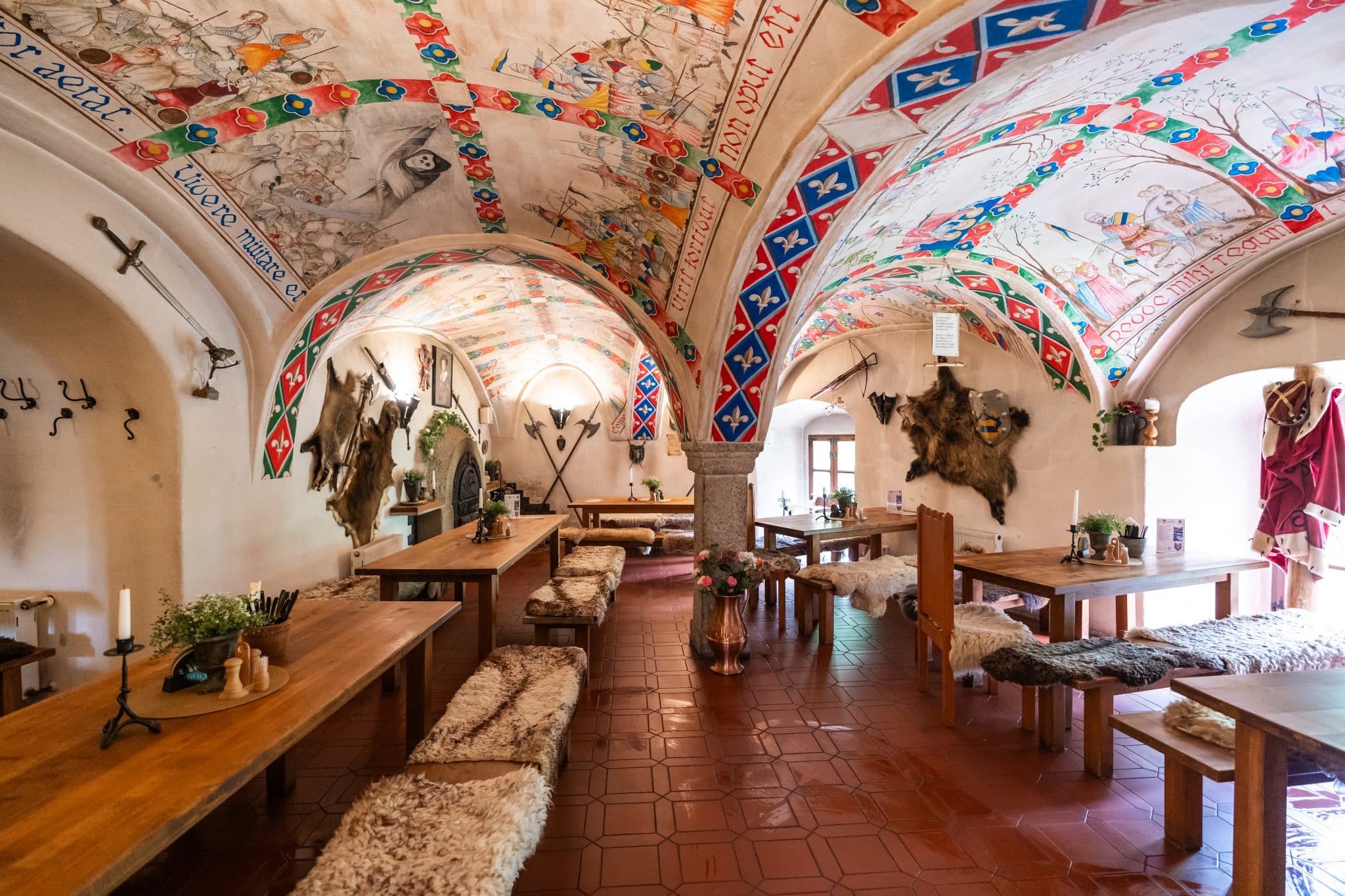
Romanesque Chapel
The Romanesque Chapel is the oldest part of the castle, with the first written mention of it dating back to 1166. Here you’ll see exhibits discovered during its reconstruction, as well as a statue of the Holy Trinity on loan from the local priest. The wooden stairs leading down to the chapel are 800 years old. They were once treated with bull’s blood, which was used as a preservative. The most significant archaeological find is the remains of a woman over 280 years old, discovered here in 1987, buried in a stone quarry.
The chapel is still used for wedding ceremonies today.
02
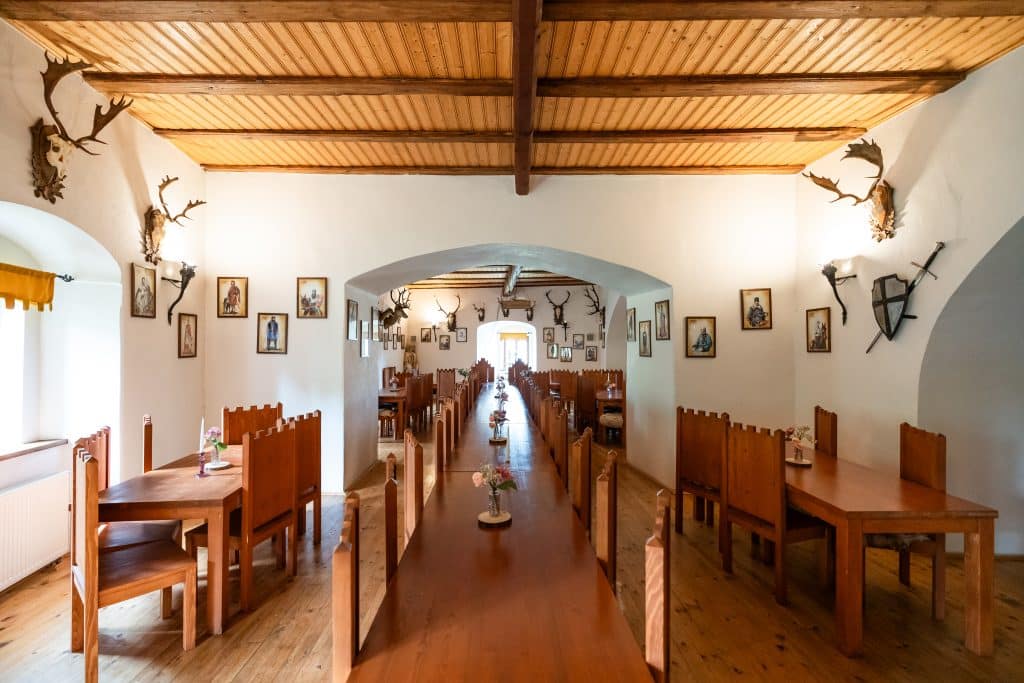
Royal Hall
Once the most important room in the castle, where distinguished guests were received. Feasts were held here, and important documents were signed. On the walls of the Royal Hall, you can admire hunting trophies from the game of Mr. Pumr. Mr. Pumr purchased the castle as a ruin in 1999, meticulously restored it, and opened it to the public in 2001. You’ll also find photographs of all Czech rulers, from Prince Borzyvoj I to T. H. Masaryk on his beloved horse, Hektor.
Today, this hall, with a capacity for up to 100 people, is used for celebrations, meetings, team-building events, and banquets.
03
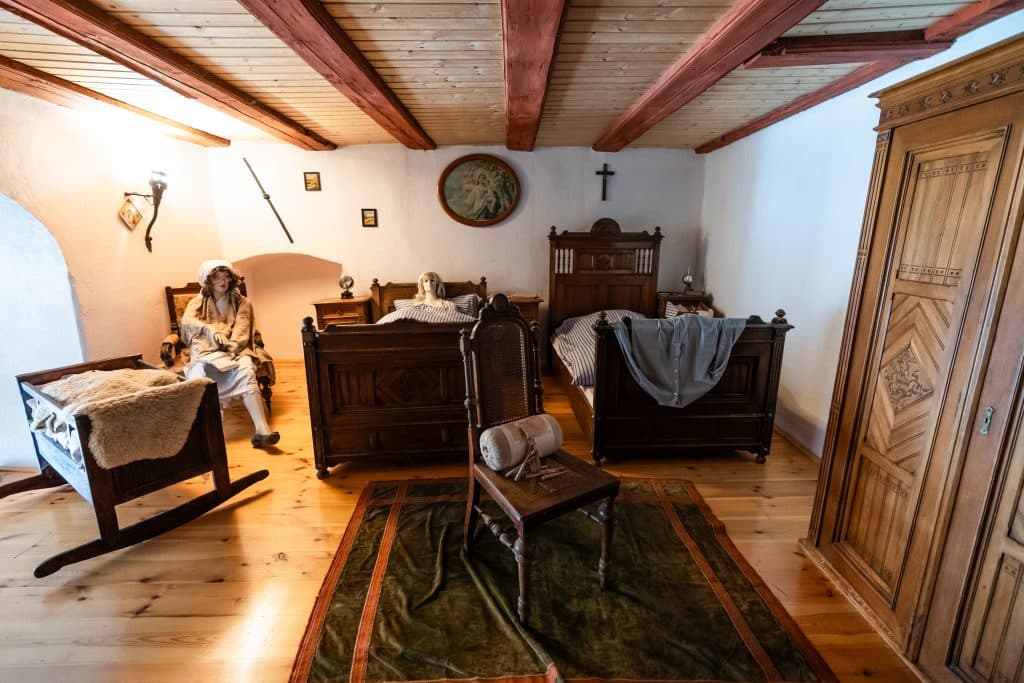
Knight Helmfeld’s Bedroom
The Helmfelds were owners of the castle in the first half of the 19th century.
The furniture you see here comes from antique shops and storage. It has been arranged to authentically reflect the period when this family lived here.
04
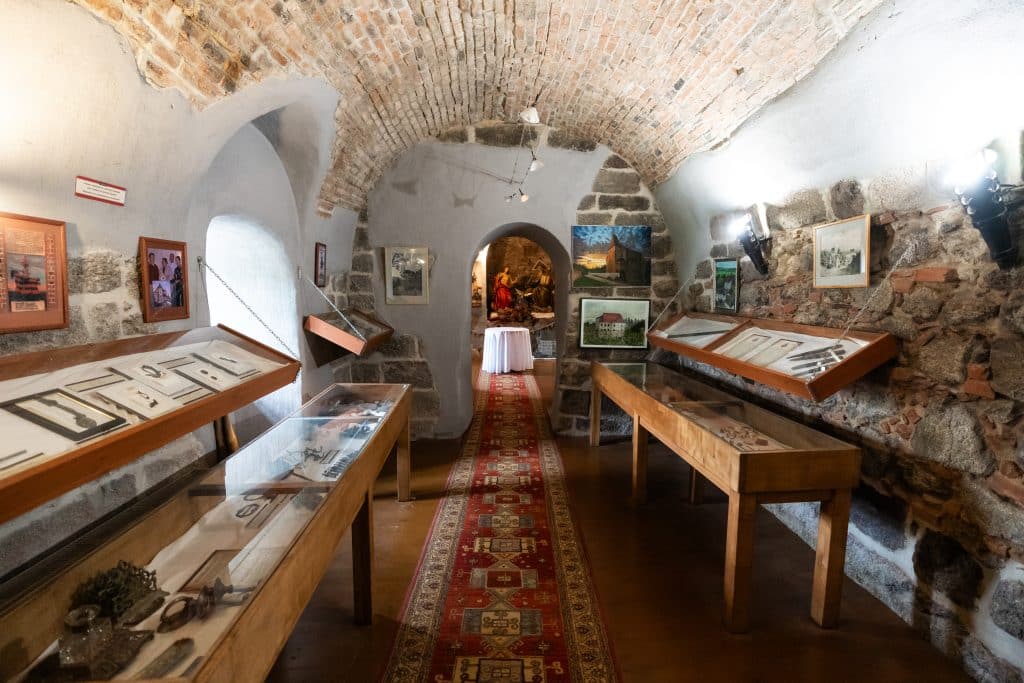
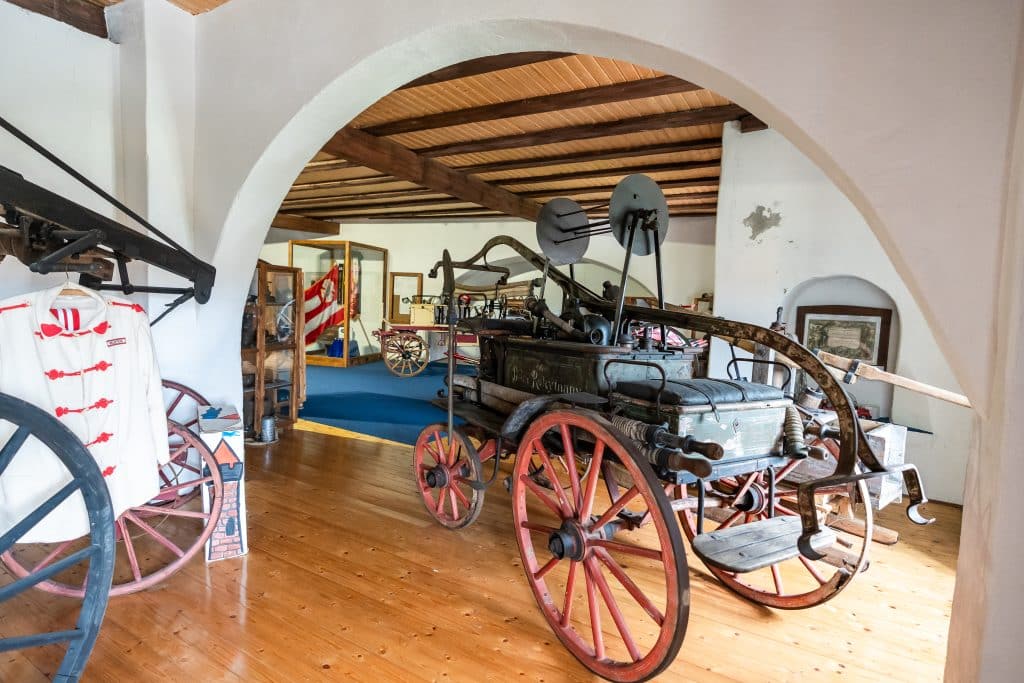
Firefighting Technology Museum
In the local Firefighting Technology Museum, you’ll discover exhibits on loan from the local fire brigade. Most of the exhibits date from the second half of the 19th century. Of particular interest is a ladder that was used during the firefighting efforts at the National Theatre in 1881. The most significant exhibit is an American flag that belonged to one of the firefighters who perished during the largest rescue operation in New York after 9/11/2001.
05
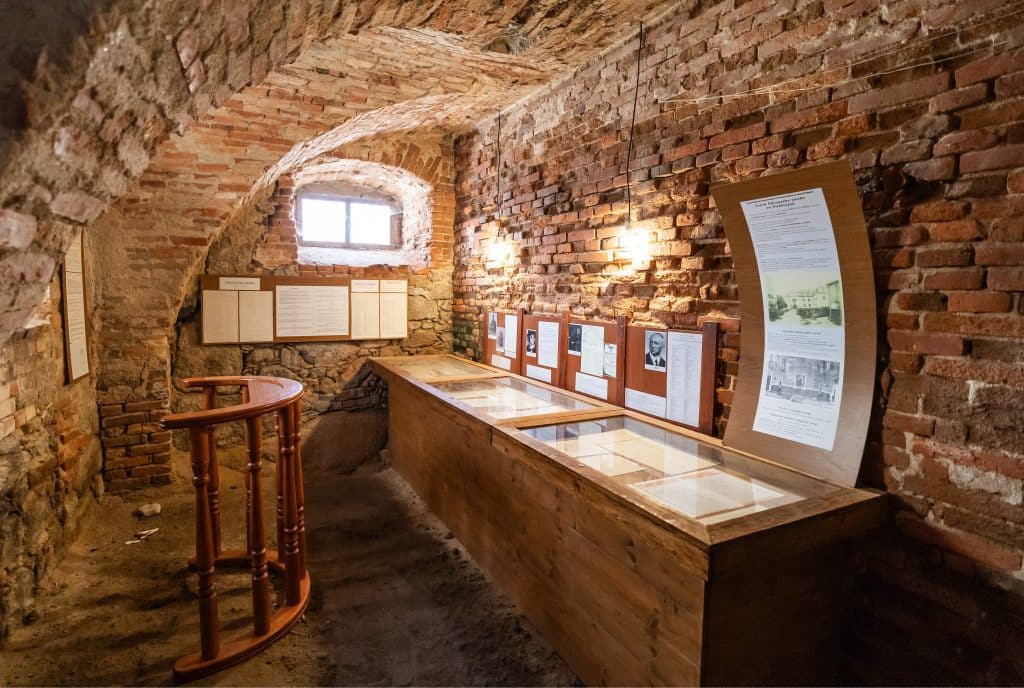
Museum of Justice and Imprisonment
The chateau building, commissioned by the Trautenbergs in 1783, served as the district court’s seat from 1850 to 1950. In the 1970s, an order was issued for the building’s demolition. Due to the negligence of officials at the time, the demolition never occurred, and the building continued to deteriorate. Fortunately, the walls and roof were successfully reconstructed, preserving the spaces, which are now an integral part of the Vildštejn Castle tour.
 English
 Čeština
 Deutsch